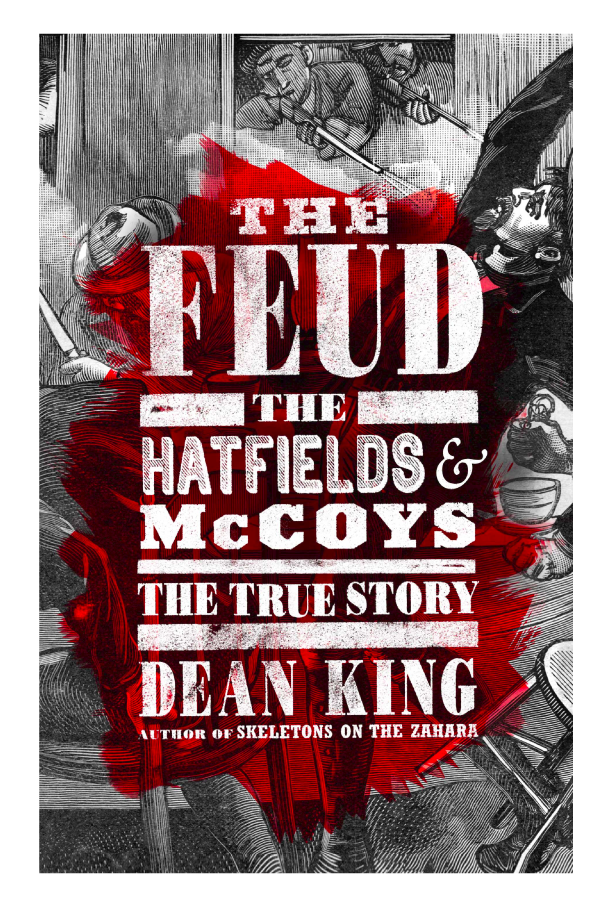
Sunday afternoon, I had the pleasure of reading from The Feud at the Village Exxon in Richmond, Virginia. This much-loved and trusted Exxon station has served families through multiple generations in our community, and last year, the owner, Jim McKenna, decided he wanted to raise money for the Wounded Warrior Project. The station’s clerk, Hope Whitby, is a poet, and she suggested having arts events in the shop. This quirky idea turned out to be a great success. The trio of grease bays cleans up smartly, and one day last spring, I found myself listening to a poet read his work with my feet propped up on the hydraulic jacks. I was immediately won over and volunteered to do a reading of The Feud. All of my research trips back to West Virginia and Kentucky began at the station. I’d take in my ’93 Volvo wagon and simply tell them what I was doing and to make sure that the car would get me there and back. (I have since traded in the Volvo for a third-hand, 2000 Mercedes wagon and will ask them to do the same with it, before I head off on my upcoming 2,000-mile driving book tour of the South.) Schedule to be pub’d here soon. Hope and the McKenna family provide refreshments and amazing dessert pastries.
One passage that I read was about the New York City journalist John R. Spears, who traveled to the Tug River in 1888:
“Two miles up the road, Spears ran into three men. Much to his relief, they were surveyors working for the Norfolk and Western Railroad, who were laying out the line that was about to be built along the Tug. The three wore heavy leather leggings for bushwhacking on the snake-ridden riverbank. The rattlers sometimes bit the leggings so hard that their teeth stuck in the leather, and their heads remained attached even after the railroad men cut off their bodies.
“You’ll find this the devil’s own country, but they won’t disturb you,” one of the surveyors told Spears. “You’re all right if they don’t mistake you for a detective. They are suspicious of strangers though.” They were not what he would call overly reassuring.
“After you’ve learned all about these mountain bushwhackers you’ll feel like shaking hands with the next rattler you meet,” said another. “The rattler never strikes without first warning his victim.”
In the next post, I will give the locals’ riposte to the sarcastic outsiders.
This is me on the marquis. I was up there for a whole month, and it was lit up at night. (All photos in this post courtesy of Gordon Valentine.)
Here I am with the owner of the Village Exxon, Jim McKenna.
They even have a podium in the grease bay.
Me again, telling a story about the Hatfields and McCoys.
Anne and Kerry, getting their books signed. And, below, Andrew, of Chop Suey, selling books.
Read More
I am really looking forward to my upcoming 2,000-mile tour to sign copies of The Feud.
This weekend, I am speaking at the Village Exxon in Richmond. That’s where I will get my car checked out before I hit the road!
Read MoreThe Rugged History Blog is here to celebrate all those out there preserving history and bringing it to life, however they do it—from preserving artifacts, sites, and books to telling history in poetry, narratives, or songs, from living like it was the year 1900 to building family trees on Ancestry.com. But it is especially to recognize those going to out-of-the-way, often dangerous places to hang on to that which is on the fringe, in danger of being lost forever. It happens all too fast. And then it’s gone. [Right now it is focusing on the Hatfield-McCoy feud, the subject of my new book.]
Read More
The award winning author of ten books and dozens of stories in national magazines, Dean King has a deep and abiding passion for historical and adventure narratives.
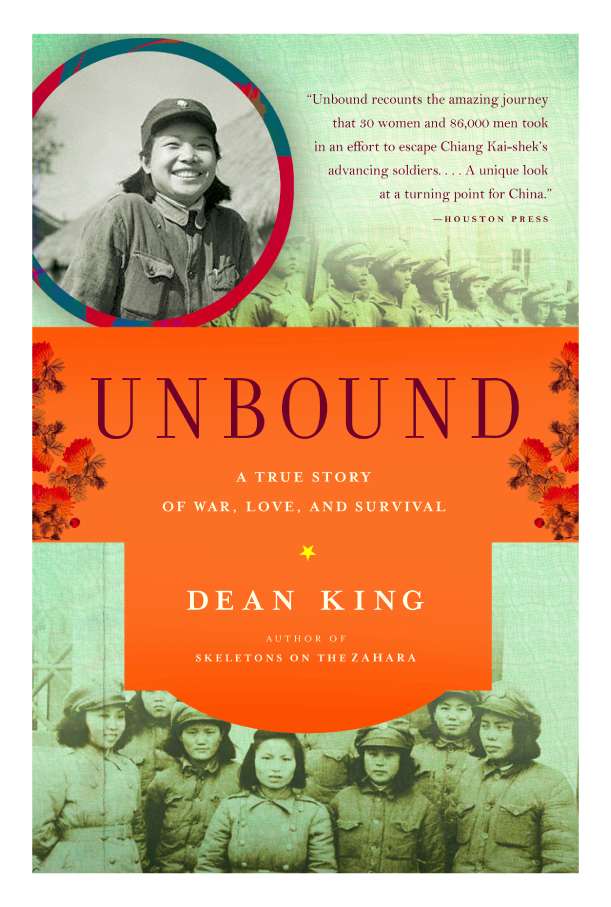
King’s latest work, Unbound: A True Story of War, Love, and Survival, about the 30 courageous women who walked 4,000 miles across China with Mao Zedong, in 1934, was published in the spring of 2010. While crossing eleven provinces, the 30 women forded dozens of raging rivers, scaled ice-covered peaks on the Tibetan Plateau, and survived ambushes, bombings, severe hunger and thirst, typhoid fever, and the births of half a dozen children. Their epic march helped reshape China forever.
Read More